Sixty-eight percent of workers who use AI at work don't tell their boss. So should I tell my boss I use AI? That question sounds simple until you actually sit with it. Then it gets complicated fast.
You found something that works. You're not sure if it's allowed. You don't want to look lazy, or like you're cheating, or like you got your job under false pretenses. So you just... don't mention it. You do the work. You send the email. You move on.
Here's the framework that actually helps.
The three types of AI users at work
Before you decide whether to say anything, it helps to know which category you're currently in. Most people fall into one of three.
The Hider keeps AI use completely off the radar. Deletes browser history, pastes into Word docs instead of leaving ChatGPT tabs open, never mentions it. The fear is getting "caught," which implies they already feel like they're doing something wrong. This is the most common posture, and it creates a low-grade anxiety that doesn't go away.
The Evangelist won't stop talking about it. Every meeting becomes an AI briefing. Every workflow becomes a prompt engineering opportunity. They've replaced their personality with a subscription to every AI newsletter. Their coworkers have started avoiding them.
The Quiet User does the work, shares the results, and doesn't make it anyone else's problem. They use AI for the boring parts, they sanity-check the output, and they show up with better work and fewer complaints. Nobody asks how the sausage is made.
The Quiet User wins. Almost always.
Should you tell your boss you use AI? The honest answer
The honest answer is: probably yes, eventually, in some form. But the timing, framing, and level of detail matter more than the disclosure itself.
Here's what doesn't work: either extreme. Hiding it completely creates risk. Announcing it constantly creates resentment. The goal is to land somewhere in the middle, where your boss knows you're using the tools without feeling like you've been deceiving them, and without getting an unsolicited lecture about "responsible AI use" every time you submit a deliverable.
According to a 2023 Fishbowl/SHRM survey, 68% of professionals using AI at work hadn't told their manager. Around 28% of employed US adults were already using ChatGPT for work tasks. Those numbers have gone up since then, not down. So if you're sitting on this question, you're in very good company.
The real question isn't whether to tell them. It's how to tell them in a way that reads as "I'm good at my job and I use every available tool" rather than "please don't fire me, I wasn't sure if this was allowed."
What your company culture is actually telling you
Most companies haven't figured out their AI policy yet. Which means the absence of a policy isn't the same as a ban. But it also means you can't always just look it up and check.
A few things worth reading before you decide what to say:
Your industry's compliance norms. Legal, healthcare, and finance have real data privacy concerns. If you're pasting client information into a public-facing AI tool, that's a problem regardless of what your boss thinks. Know your regulatory environment before you know your disclosure strategy.
Your boss's personal tech comfort level. Some managers have already integrated AI into their own workflow. Others still print emails. If your boss is in the second camp, a detailed explanation of how you use Claude to synthesize meeting notes is going to confuse and unsettle them. Adjust accordingly.
Whether anyone at your level is already talking about it openly. If colleagues are mentioning AI use in stand-ups and nobody's getting fired, you have social proof. If you'd be the first, that's a different calculation.
The actual language in your employment contract or company policy. Some organizations have issued AI use policies in the last year. Some of those policies ban certain tools. Some require disclosure. Worth checking before you assume it's all fine.
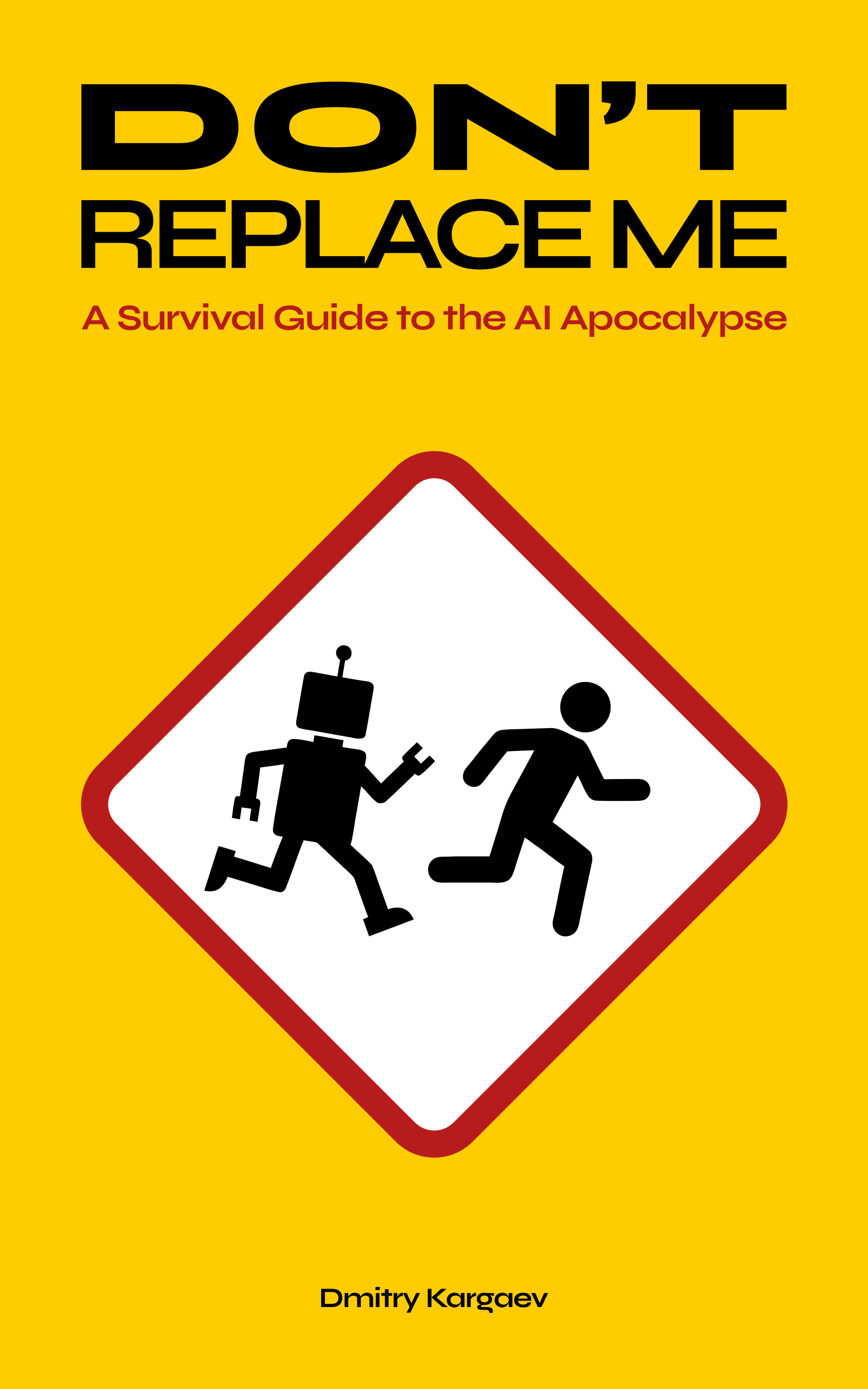
This came from a book.
Don't Replace Me
200+ pages. 24 chapters. The honest version of what AI means for your career, written by someone who actually builds this stuff.
Get the Book →The quiet weapon approach: results, not methods
There's a concept in Don't Replace Me called the quiet weapon. The idea is that AI is most useful when it makes your work better without making your AI use the story. You're not trying to hide anything unethical. You're just not narrating your tool usage any more than you'd explain which keyboard shortcut you used to format a spreadsheet.
Most of the time, your boss doesn't need to know your methodology. They need to see the output. If the output is good, questions about how you got there are mostly academic.
This changes if you're in a role where the process is auditable. If you're a lawyer, a doctor, a researcher, or anyone whose professional judgment is explicitly what the client is paying for, the provenance of your work matters. That's a different conversation, and it should probably happen with your compliance team before it happens with your boss.
For most office workers in most roles, the practical answer is this: use AI for the tasks it genuinely helps with, check the output before it leaves your hands, and let the quality of your work do the explaining. If someone asks, tell them. If nobody asks, you don't owe anyone a press release.
How to actually tell your boss you use AI (if and when you do)
If you decide to bring it up, or if you get asked directly, here's how to not make it weird.
Don't confess. You didn't do anything wrong. The framing matters. "I've been using AI to help draft first versions of client reports" lands differently than "I have to tell you something."
Don't oversell it. Your boss doesn't need a presentation on how AI is going to transform the business. They need to know that you have a new tool and that it's producing good work. That's it.
Do be specific. "I use ChatGPT to help me structure my weekly updates before I edit them" is clear and concrete. "I've been exploring AI solutions to optimize our workflow processes" sounds like you're hiding something behind jargon.
Do be honest about what you check. Bosses and clients care about accuracy and reliability. If you explain that you use AI as a starting point and then review and edit everything yourself, you're not admitting to laziness. You're describing a sensible process.
If your company announces a formal AI policy and asks employees to disclose, disclose. Don't treat it like a loyalty test you need to game.
If you're worried about AI anxiety at work making this feel bigger than it is, that's worth separating out. Sometimes the fear of telling your boss is less about AI and more about general workplace anxiety. Those are related but not the same problem.
When hiding it actually is a problem
There are situations where staying quiet is the wrong call.
If your company has an explicit policy requiring disclosure, and you're ignoring it, that's a compliance issue, not a judgment call.
If you're in a client-facing role and the client's data is going into an AI system that the client hasn't consented to, that's a legal and ethical problem. It doesn't matter how good the output is.
If AI is producing work that you're presenting as original creative or analytical thought in a context where that distinction matters (academic research, expert testimony, original creative work under contract), the line gets complicated fast. Know where your industry draws it.
And if your entire job output has quietly become AI-generated with almost no human input or review, and you're billing or being paid for expert judgment, you've crossed from "using a tool" into "misrepresenting your work." That's not a disclosure problem. That's a bigger problem.
For the vast majority of people using AI to draft faster, summarize better, and think through problems more efficiently? None of that applies. You're not doing anything that requires confession. You're doing your job with better tools.
Should I tell my boss I use AI? The decision matrix
Here's a quick way to think through your specific situation:
| Situation | What to do |
|---|---|
| No company AI policy exists | Use it, share results, mention it casually if asked |
| Company has a disclosure policy | Disclose as required. That's it. |
| Client data is involved | Check data privacy rules before using AI at all |
| Boss is tech-forward and already mentions AI | Bring it up naturally. They'll probably be interested. |
| Boss is tech-averse and won't get it | Let the results speak. Tell them if directly asked. |
| You're in a regulated industry | Consult compliance before anything else |
| You're already getting asked "how did you do this so fast?" | That's an invitation. Tell them. |
The most important column is the last one. If your work has gotten noticeably better or faster, people will notice. When they ask, being able to say "I've been using AI to handle the first draft and then editing it heavily" is a lot better than getting flustered and changing the subject.
If you want practical guidance on what to actually use and how to start, the starter guide to using AI at work covers the specifics without the theory spiral. And if you want to know which prompts actually do something useful in a real job context, this breakdown of ChatGPT at work is more concrete than most.
The short version of all of this: don't hide it indefinitely, don't broadcast it constantly, and make sure the work is actually good before it leaves your hands. That combination covers most situations.
Don't be weird about it. That's Rule #16 for a reason.
Frequently asked questions
Should I tell my boss I use AI, or just keep quiet?
For most people in most roles, quiet disclosure on a need-to-know basis is the right move. You don't have to announce it, but you shouldn't actively lie if asked. A 2023 Fishbowl survey found 68% of AI-using employees hadn't told their manager, and widespread firings haven't followed. Check if your company has a formal policy, and let that be your floor.
Is it cheating to use AI at work without telling your boss?
No, using AI at work isn't cheating any more than using Google or Grammarly is cheating. The exception is if your company has an explicit policy requiring disclosure, or if you're in a regulated field where the source of your work matters legally or ethically. For most office workers doing most tasks, using AI tools is just using the tools available to you.
What happens if my boss finds out I've been using AI?
In most cases, not much. A 2023 Fishbowl survey found that 68% of AI-using employees hadn't told their manager, and widespread mass firings haven't followed. The more likely outcome is a conversation about your company's AI policy, if one exists. The bigger risk is if you've been pasting client or confidential data into public AI tools without checking your data privacy obligations.
Should I ask my company if AI use is allowed before I start?
It depends. If you're in a large, compliance-heavy organization in finance, law, or healthcare, checking the policy before you start is smart. If you're in a smaller company or a less regulated field and there's no policy, asking unprompted might create scrutiny that didn't exist before. Use common sense, check any existing written policies, and don't input confidential client data without knowing where it goes.
What if my boss asks directly if I used AI?
Tell the truth. Say yes, explain briefly how you used it (as a drafting tool, for summarization, for research), and emphasize that you reviewed and edited everything. Lying when directly asked is a much bigger problem than the disclosure itself. Most managers who ask are curious, not trying to build a case against you.
What's the difference between using AI and letting AI do your job?
Using AI means you're using it as a tool in your workflow. You're reviewing output, catching errors, adding judgment, editing for accuracy and tone. Letting AI do your job means you're passing through unreviewed outputs and billing your expertise when you haven't actually applied it. The first is fine. The second is a professional integrity issue that has nothing to do with AI specifically.